


Freisa
It most probably originated in the hilly area between Asti and Turin. It subsequently spread to the neighbouring provinces.
CULTIVATED AREA IN ITALY
|
YEAR |
1970 |
1982 |
1990 |
2000 |
2010 |
|
HECTARES |
7.088 | 3.391 | 2.017 | 1.452 | 1.081 |
Bud-burst period: everage.
Ripening period: everage.
Yield: abundant and constant, although it may suffer with coulure and millerandage, particularly in some biotypes.
Ampelographic characters:
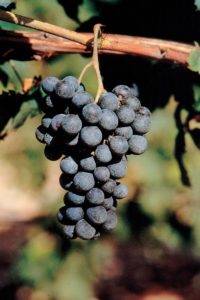
relatively homogeneous variety (even though other vines are referred to with the same name), with fairly stable features in the classic “Chieri” type. The bud has an expanded light green apex, almost glabrous. The medium-sized, pentagonal, three-lobed leaves are pale green on the upper surface and almost glabrous on the lower side. The cluster is medium-sized, almost cylindrical, sometimes with a wing, semi-compact and has a long green stalk. The medium-sized berry is sub-round of a bluish-black colour. The thick and pruinose skin has a juicy flesh, of sweet, rather sour and simple flavor.
Cultural aptitude:
vigorous vine with an expanded growth habit. It has medium-sized shoots with long internodes and luxuriant vegetation. It adapts to various types of soils, favoring those that are well-exposed, thus reducing its vegetation for better quality results. In fact, any negative criticism about the wine has only to do with a wrong choice of cultural environment, every so often flat and humid.
Training system and pruning:
it adapts to more-or-less expanded training systems and it prefers long pruning as it tends to yield on middle and terminal buds.
Susceptibility to diseases and adverse conditions:
good resistance to downy mildew, less resistant to powdery mildew and botrytis.
Enological potential:
generally speaking, it generates a dry wine with good acidity. It produces a good meal wine in blending with other Piedmontese grapes. In the best and most well-exposed areas, it gives excellent wines, even further refined with aging. The scent is elegant and generous.
Clones in propagation:
Freisa VCR1, VCR3, VCR208, CVT15, CVT20, CVT154, CVT157.
Freisa
VCR1
Chieri
Enological potential:
Origin: Calosso (AT)
Registration year: 2000
VARIETY EVERAGE
SENSORY PROFILE
—●— Variety everage
—●— VCR1

Freisa
VCR3
Chieri
Enological potential:
Origin: Monteu Roero (CN)
Registration year: 2002
VARIETY EVERAGE
SENSORY PROFILE
—●— Variety everage
—●— VCR3


Freisa
VCR208
Chieri
Enological potential:
Origin: Costa Vescovato (AL)
Registration year: 2009
VARIETY EVERAGE
SENSORY PROFILE
—●— Variety everage
—●— VCR208
