


Berlandieri x Riparia Group
Kober 5BB
Origin: Austria (Kober e Teleki – 1896).
VEGETATIVE FEATURES
Leaf: large, whole, round-shaped, with V-U open petiolar sinus; the lower side is green and hairless, and has a light-green-colored flap, slightly bent, the ribs at the base are pinkish; it often shows reddish ribs.
Woody shoot: long, uniform, branched, with a good development of secondary shoots, slightly elliptical, striated, glabrous, partially pruinose, purplish brown, with more marked stripes along the internode and at the nodes.
CULTURAL APTITUDES
Ability to promote fruit setting:
good
Root system regeneration:
good
Adaptability to soil type:
- compact: good
- wet: good
- dry: average
- stony: acceptable
- sandy: good
- acidic: acceptable
- saline: poor
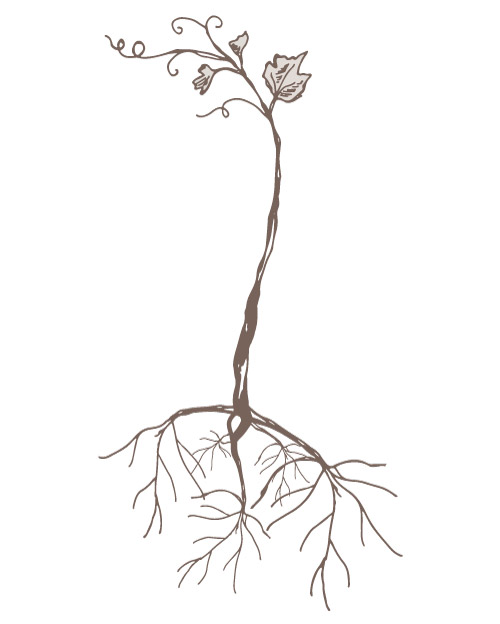
Branching pattern of the roots:
expanded
Tendency to emission of suckers:
average
Susceptibility to deficiencies or excesses:
- deficiency of K: sensitive
- deficiency of Mg: sensitive
- deficiency of Zn: sensitive
- deficiency of P: senstive
- deficiency of Fe: sensitive
- deficiency of B: sensitive
- excess of Cu: sensitive
Resistance to root phylloxera:
excellent
Resistance to leaf phylloxera:
poor
Susceptibility to fungal and plant diseases:
downy mildew: low
powdery mildew: low
botrytis: induce sensitivity
anthracnose: sensitive
melanosis: sensitive
eutypa disease: it induces sensitivity
esca disease: it induces sensitivity
rachis desiccation: it induces sensitivity
OTHER INFORMATION